Is the Bible Really True? How to Understand the Christian Doctrine of Scripture as a New Believer
John Neyman Jr · September 18, 2026 · 5 min read
When I was first exploring Christianity, one question kept stopping me before I could take another step forward: Can I actually trust this book?
It felt almost too convenient — a religion that asks you to believe it, pointing to its own sacred text as proof. But the more I sat with the doctrine of Scripture, the more I realized something important: the Christian case for the Bible isn't "trust it because we said so." There are real reasons, accessible to any honest beginner, to take biblical inspiration and inerrancy seriously. Let me walk you through what those reasons are.
What Does "Inspired and Inerrant" Actually Mean?
First, let's define the terms, because they get misused constantly.
Inspiration doesn't mean God dictated the Bible word-for-word like a boss to a secretary. The classic text is 2 Timothy 3:16 — "All Scripture is God-breathed" — which describes Scripture as breathed out by God. Christian theology has historically understood this as God working through the personalities, experiences, and writing styles of human authors to communicate exactly what He intended. Paul writes like Paul. Luke writes like a careful historian. David writes like a poet in anguish. Yet Christians believe the divine hand guided every word.
Inerrancy means the Bible, in its original manuscripts, is without error in everything it affirms. This does NOT mean the Bible was written in the language of modern science, or that every number is a precise census figure, or that phenomenological language ("the sun rose") is a meteorology claim. It means: where the Bible makes an assertion — historical, theological, ethical — that assertion is true.
Understanding this distinction alone clears up a huge portion of beginner confusion.
The Manuscript Evidence Is Remarkable
Here's something that surprises most newcomers: we can actually test the textual reliability of the Bible in the same way historians test any ancient document.
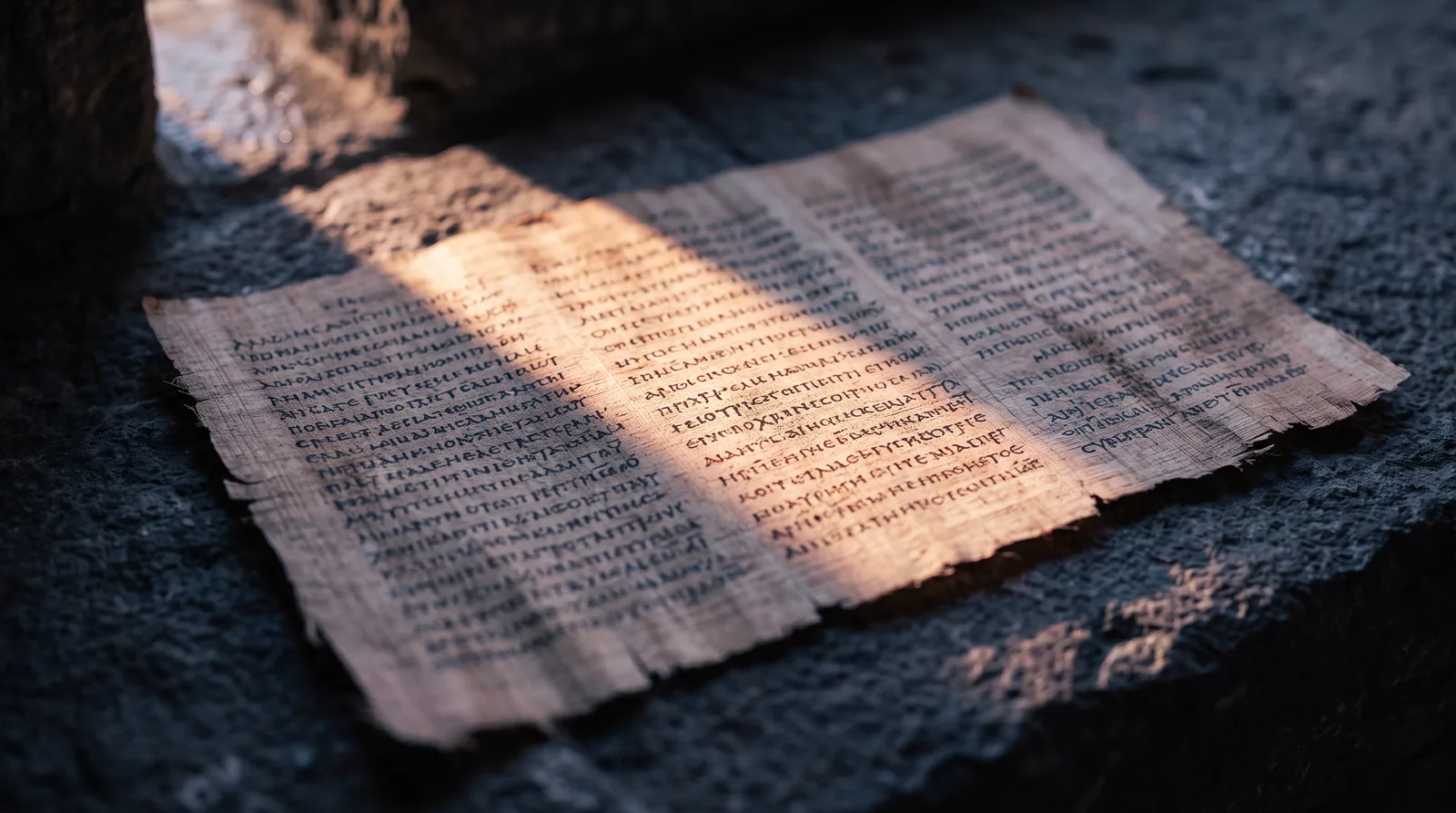
For the New Testament, we have more than 5,700 Greek manuscripts — fragments, partial texts, and full copies — along with tens of thousands of additional manuscripts in Latin, Syriac, Coptic, and other languages. The earliest fragments date to within decades of the original writings. Compare that to Caesar's Gallic Wars, which survives in about 250 manuscripts, the earliest copied roughly 900 years after Caesar wrote it. No historian refuses to quote Caesar on those grounds.
The manuscript tradition for the New Testament is, by any measure of ancient document scholarship, extraordinarily strong. Textual scholars have been able to reconstruct the original text with a very high degree of confidence — and the places where manuscripts differ are overwhelmingly minor spelling variants and word-order issues that affect no core doctrine.
The Internal Consistency Argument
The Bible was written over approximately 1,500 years, across three continents, in three languages, by around 40 different authors — shepherds, kings, fishermen, doctors, and prisoners. Many of these authors never met each other.
And yet the Bible tells one coherent story: humanity's fall, God's pursuit, redemption through a coming Messiah, and the restoration of all things.
That kind of unity across that kind of diversity doesn't prove divine authorship on its own — but it is a fact that any honest reader has to account for. Random accumulation doesn't typically produce thematic architecture this tight.
Jesus Himself Treated Scripture This Way
This is the argument that carries the most weight for me personally, and I think it deserves more attention in beginner conversations.
If you're willing to grant even basic historical reliability to the Gospel accounts, you quickly notice something: Jesus quoted, cited, and appealed to the Old Testament constantly — and he treated it as settled, authoritative, and true. In Matthew 5:18, he says not even a "jot or tittle" (the smallest marks in Hebrew writing) would pass from the Law until all is fulfilled. In John 10:35, he states plainly that "Scripture cannot be broken."
This matters because it means the doctrine of biblical inerrancy isn't an invention of later church councils. It was held by Jesus himself. If you're working through what you believe about Jesus, his view of Scripture has to be part of that conversation.
What Inerrancy Doesn't Require You to Do
I want to be honest with you here: holding to biblical inerrancy doesn't mean you have to have an answer for every hard passage right now. Scholars have wrestled for centuries with genuinely difficult texts — apparent contradictions, chronological puzzles, archaeological questions. Inerrancy is not the claim that every difficulty is already resolved. It's the claim that Scripture is trustworthy enough that those difficulties are worth working through rather than running from.
That's a posture, not a performance. You're allowed to say "I don't know yet" while still saying "I trust this book."
A Place to Start
If you want to go deeper, here is a practical starting point: read the Gospel of Luke. Luke opens his account by explicitly saying he researched carefully and wrote in order (Luke 1:1–4). He writes like a historian who knows he's being held to a standard. Read it as you would read any serious historical document — with a pencil, with questions, with honest attention — and see what you find.
The doctrine of Scripture isn't asking you to check your brain at the door. It's inviting you to bring your full mind to a book that, Christians believe, can bear the weight of your hardest questions.
That's where the real journey begins.